
Budget Reflections
The following is the latest in a series of blog posts which set out the work of the BHA corporate affairs department, working alongside industry colleagues. This edition sets out reflections on the outcome of the budget in November.
A changed gambling market
The plan for 2025 had been for a year of significant activity when it came to the work of the industry’s collective public affairs functions, but once the Government set out its gambling tax harmonisation proposals at the end of April, we were always in for a busy and ultimately important year.
To recap, independent modelling commissioned by the BHA was received by the late spring. It demonstrated that a harmonised tax rate of 21% would cost the horseracing industry around £66m a year and potentially cost 2,752 jobs or worse if the tax rate went higher. Naturally, we had clear concerns about the Treasury’s direction of travel.
Going into the consultation, racing held a comparatively weak tax position where competitor products such as sports betting (charged at General Betting Duty – 15%) and online casino products (charged at Remote Gaming Duty – 21%) had an edge built in given the existence of the Horserace Betting Levy, which made British racing’s effective tax rate 25%. A bad result would have only exacerbated this and may have proved terminal for operators’ appetite for promoting British racing.
It was clear that the sport’s future could be at risk without a compelling evidence case against the proposals, supported by a visible and impactful public campaign against harmonisation.
Fortunately, as has been demonstrated time and again in recent years, when our industry pulls together, it has a powerful voice.
It was a long wait for the Budget to finally be delivered by the Chancellor Rachel Reeves. But by the time she got to her feet in the Commons any element of expectation was removed following an earlier leak of her Budget report by the financial watchdog the Office for Budget Responsibility.

In confirming that horserace bets would be spared from a tax increase and that their plans to harmonise all the separate online betting taxes into one single rate had been shelved, the Government provided a welcome vote of confidence in our sport.
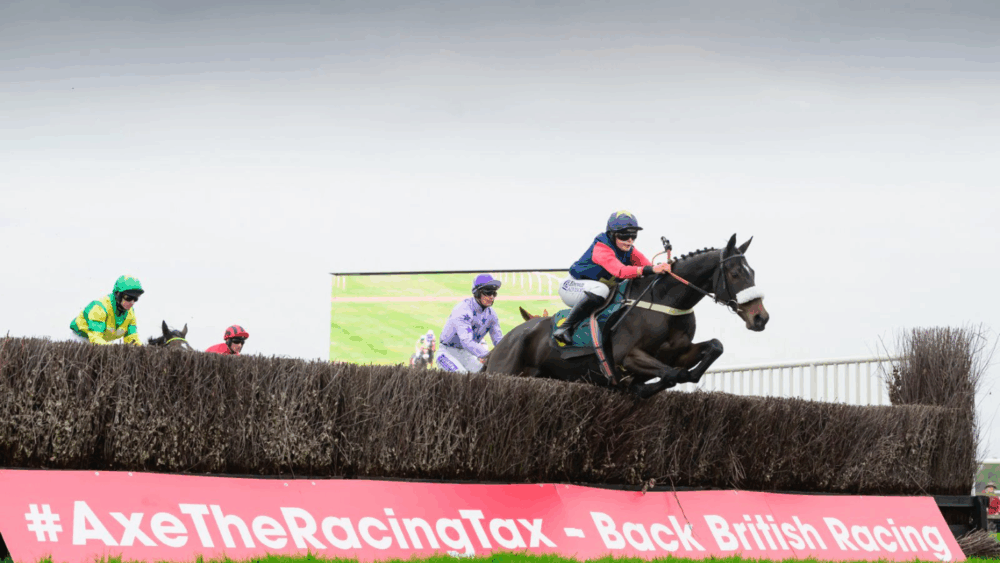
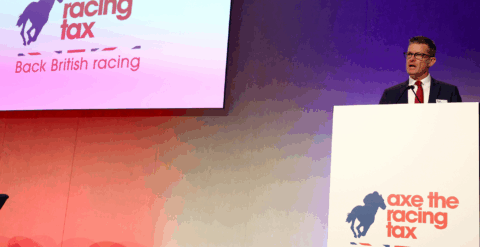
The recognition of the sport’s “unique circumstances” by the Treasury was a vindication of the effort that went into the cross-industry Axe The Racing Tax campaign to highlight why racing needed to be treated differently. Every part of the industry played a vital role, whether it be sending letters to their MPs, sacrificing a day of racing to help facilitate or attend the campaign event in Westminster on September 10th, or representing the sport in national and regional media to help the public understand the predicament faced by the industry.
Our parliamentary allies in the All-Party Parliamentary Group for Racing and Bloodstock were also key, tabling written questions, spying opportunities to get Ministers on the record on this issue and lobbying privately behind the scenes.
A media report shared with us last week confirms that, since June, there have been nearly 900 individual pieces of coverage on the Axe The Racing Tax campaign, helping the sport achieve an unprecedented amount of mainstream news coverage. It will hopefully have an additional benefit as an awareness-raising exercise for British racing.
While we acknowledge that the betting industry has been hit by a significant rise in online gaming taxes – and the financial implications this will have on operators and, consequently British racing – the Government’s decision to maintain the 15% tax rate on online bets on British racing undoubtedly avoids the worst-case scenario for our sport and the communities it supports.
By maintaining the 15% tax rate, the Government has levelled the playing field with other sports betting products – including with bets on international racing – with those products going up to racing’s effective 25% tax rate (when a Levy rate of 10% is included) from 1 April 2027.
Elsewhere, the gambling tax rates for Licensed Betting Offices (LBOs) remained unchanged after the Budget. This was welcome as following the political narrative shift after Labour conference away from the initial harmonisation question towards wider gambling reforms, we privately highlighted to the Treasury the potential knock-on impacts on media rights and Levy payments if gambling tax rate rises caused widespread LBO closures.
The most significant rise in taxation is on Remote Gaming Duty, with a hike from 21% to 40% from 1 April 2026. While a rise of some level felt inevitable given the clamour on the Government backbenches, and a high-level intervention from former Prime Minister Gordon Brown, the scale of the increase was higher than anticipated and has understandably caused concern for operators who now face a significant tax hike.
Given the importance of online casino products to operators’ business models, it remains to be seen how this tax rise will impact their marketing, sponsorship and advertising spend on products like horseracing and other sports.
We have always recognised that any impact on operators’ bottom line may influence our income streams. It’s why we want to work with the industry to see how we can mitigate that impact.
Finally, we would like to use this blog to endorse the decision made by the Treasury to provide the Gambling Commission with £26m in additional funding to tackle the illegal market, which we understand represents a significant increase in the amount of money allocated for this purpose.
A clear message on the illegal market was delivered by DCMS Minister Ian Murray MP during a Westminster Hall debate on Gambling Regulatory Reform on 2 December, stating: “if someone is operating in the illegal market, we are coming after them — legislatively, regulatorily and with money.”
As demonstrated by the IFHA data in February, the illegal market is growing at an alarming rate, but this feels like a positive initial step in recognising the scale of the challenge and moving to address the issue.
Looking Ahead
The rise in gambling taxes in the Budget will impact betting operators significantly and British racing is keen to work closely with the betting industry to understand the wider impact of these changes and look at how we can grow the sport in what is a challenging economic climate. Collaboration is imperative if we are to ensure that British racing is not only an attractive betting product but a sport that is able to grow in popularity in a crowded leisure market.
In the gambling space more broadly, there was a notable intervention at PMQs on Wednesday 3 December that shows gambling reform campaigners will continue to be an active force in Westminster. A question from Beccy Cooper MP (Lab, Worthing West) on gambling advertising, and whether further restrictions could be pursued, perhaps indicated some of the challenges we may face in the future.
One of the legacies of Axe The Racing Tax campaign is that a wider group of Parliamentarians understand the importance of horseracing to the nation’s cultural, social and economic fabric and the BHA – along with racing’s wider stakeholders – intend to work closely with our new parliamentary allies, as well as members of the APPG for Racing and Bloodstock, in 2026. In addition to gambling policy, there are other emerging areas of focus such as the UK Government’s relationship reset with the EU which will have an impact on the cross-border movement of Thoroughbreds, which has been an ongoing area of concern post-Brexit.
Thanks for reading in 2025 and Merry Christmas!
By Jack Barton, BHA Policy & Advocacy Manager