
Equine influenza: update on measures for trainers and teams
British racing has this week taken vital precautionary measures to help protect the thoroughbred racing herd from equine influenza.
We are very grateful to you and your teams for your assistance, cooperation and pragmatic response to these steps and the biosecurity of our industry more generally.
Equine flu is a highly contagious virus that spreads rapidly. Cases in the non-thoroughbred population are higher than at any time in recent history, with more than 68 reported outbreaks across 36 counties.
Vaccination remains one of the best protections our horses have against the virus. It reduces the likelihood and severity of illness. If a horse does become infected, vaccination limits the spread of infection.
Despite the huge benefits of vaccination, protection can never be 100%. We must also therefore try to prevent the virus entering the racing herd in the first place. This is how we keep our horses healthy and ensure racing continues without interruption at a pivotal period in the calendar.
The greatest risk to the thoroughbreds in training is exposure to sick horses or those that are shedding flu virus.
This is most likely to occur when horses of unknown disease or vaccination status are in close proximity, such as when a new horse enters a yard or where there is mixing outside of the racing environment at shows or other equine events.
The data from the Equine Infectious Disease Surveillance team tells us that a high proportion of flu outbreaks involve horses that have recently moved premises.
It is therefore essential that horses that are being brought into licensed yards are vaccinated and properly isolated for a 14-day period to ensure they are healthy and disease-free before they mix with the established horses.
These horses should be monitored daily for signs of infection and veterinary advice sought immediately if they show signs of disease, such as a high temperature, are off feed, have a harsh cough or nasal discharge.
In expressing the BHA’s extreme concern over potential mixing of horses, some comments have been taken and reported out of context.
This is not about the individual biosecurity arrangements of individual events. Indeed, the BHA liaised with Goffs ahead of the recent Doncaster sales on the biosecurity measures in place.
It is about maintaining a closed racing herd by preventing mixing and ensuring proper isolation after these events, when new horses are entering training premises.
Difficult decisions have taken to restrict the movement and mixing of horses so that we reduce racing’s risk of exposure to flu.
These decisions have been informed by science and made following extensive consultation with independent and world-renowned experts on the management and control of infectious diseases.
We recognise that for some these actions have been disappointing, especially where it has had a more direct impact on their operations and activities.
However, the response from the industry to the advice provided and the decisions taken in recent weeks has been supportive, responsible and pragmatic.
From training yards, racecourses, sales houses, breeding operations, gallop management teams and so many others – everyone wants to play their part in protecting the thoroughbred racing herd.
We welcome how seriously this is being taken, including by the wider equine sector, which also recognises the challenges we face.
It is important that at a time where the entire industry needs to be unified in our approach, we do not allow ourselves to become distracted by disagreements in the media.
We all want the same thing: a healthy racing herd that can compete on the racecourse.
Our efforts must be focused entirely on maintaining the biosecurity of our industry, protecting our horses and preventing the spread of equine flu to the thoroughbred racing herd.
Thank you for your ongoing support and cooperation. You can find our latest guidance on the BHA website.
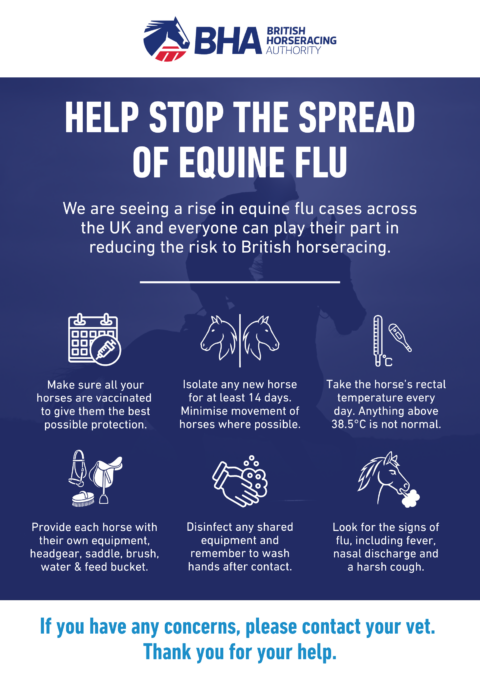
Click to download this infographic of the key steps you can take to reduce risk