
The high-tech athlete: how wearable technology is transforming veterinary care
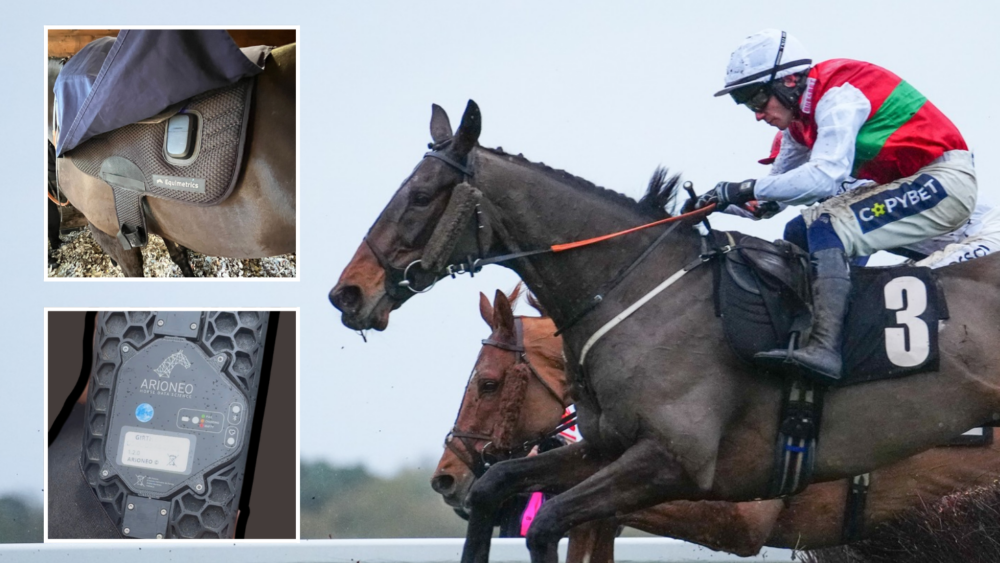
Writing in Horse & Hound magazine, BHA veterinary officer Howard Newitt MRCVS explains how wearable technology is transforming equine veterinary care in horseracing.
British horseracing has always been at the forefront of innovation, especially when it comes to the welfare and performance of the thoroughbreds at the heart of the sport.
Behind every racehorse is a dedicated team of trainers, grooms, owners, vets, farriers, nutritionists and many others, who all work to ensure that these equine athletes are in peak physical condition to race.
In a highly competitive environment, in which fractions of a second can mean victory or defeat, a horse’s connections are increasingly embracing the latest in digital technology to help give them the cutting edge.
Traditionally, racehorse trainers have relied on expert horsemanship and professional veterinary experience to inform decision-making about a horse’s health, wellbeing and readiness to race.
As equine vets, our methods of assessing a horse’s condition have typically included physical examinations, careful observation, blood tests, imaging and of course trainer and rider feedback.
These diagnostic and monitoring methods remain essential and, when it comes to horses, the human relationship and intuition is irreplicable. But what these techniques often provide is a subjective assessment, which is where wearable technology comes in.
How digital technology can help
Most of us will be familiar with trackers and smartwatches to measure and (hopefully) improve our own health and fitness. But what about putting the equine equivalent on racehorses?
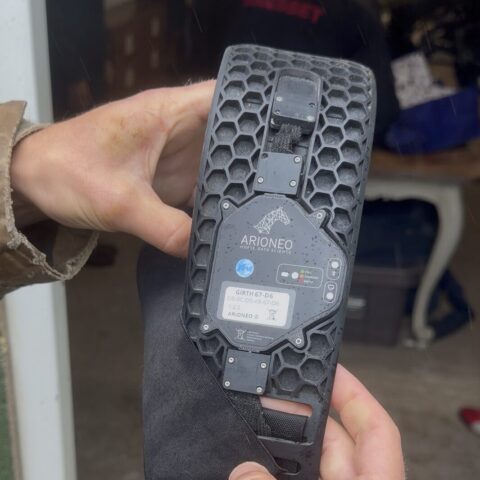
Technology has rapidly evolved to meet the unique demands of equine wellbeing and performance
As in all walks of life, advances in technology have enabled the development of more effective tools to support improved data collection and detailed analysis. And wearable devices have rapidly evolved to meet the unique demands of equine wellbeing and performance.
This high-tech biometric kit is fast becoming one of the most exciting and powerful tools available to racing and veterinary professionals. Sophisticated sensors on a horse’s body can continuously monitor movement, speed, stride length, temperature, cardiac activity and much more.
The devices can help us track health, prevent injuries and advance horse welfare by providing real-time information that often was previously impossible to collect outside a clinical setting.
Used to collect data in training, transportation, recovery and even during rest periods in yards, such devices can provide a constant stream of information, giving connections and vets a much more comprehensive understanding of each horse’s physical condition.
These devices generate detailed information that is analysed by software within the apps, potentially providing trainers and vets with early warning signs of change in the horse’s health long before they are visible to the human eye.
This is not only helping to improve performance on the gallops and on the racecourse, but also reshaping veterinary medicine by supporting earlier diagnosis, more personalised treatment and more proactive injury prevention.
Cardiovascular health monitoring
Cardiac function is critical to a horse’s wellbeing and overall performance. The equine heart is a remarkably powerful and efficient organ, pumping hundreds of litres of blood through the body and delivering oxygen to the horse’s muscle groups.
From a resting rate of approximately 30 beats per minute, a horse’s heart rate can reach a staggering 240 bpm when galloping – fuelling the thoroughbred’s unrivalled athletic ability.
But, as in people, cardiac rhythm irregularities can sometimes occur. When they do, they can cause poor performance and in rare cases more severe signs such as collapse or death.
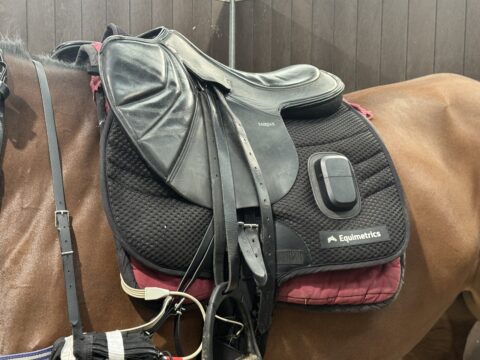
A pilot scheme is testing the use of biometric devices under race conditions
In horses, most rhythm interruptions are minor and can occur at rest and when galloping. Some of these abnormalities only occur during intense exercise and disappear during recovery.
The challenge for us as vets is to know that these rhythm interruptions have occurred if they have disappeared by the time the horse pulls up and we can get a stethoscope on the chest to listen.
Wearable devices allow the rhythm to be monitored throughout the exercise, so that we can review what has happened and determine if a rhythm issue is the reason for the poor performance – and if it is, or could potentially be, then decide on what further investigation and monitoring may be required.
Wearable biometric technology allows us to track a horse’s electrical cardiac function through electrocardiograms (ECG), enabling us to monitor cardiac activity at racing speed – something that previously would not have been feasible.
Racehorse trainers have been using this equipment in yards and on the gallops for many years to inform their planning around things like training regimes and rest periods, with daily analysis and monitoring supporting a horse’s readiness to race.
First across the line
Just last year, British racing became the first jurisdiction to permit the use of this wearable technology on the racecourse as part of a pilot scheme to test the kit under race conditions.
Working with Max Kendrick and the team at Fergal O’Brien Racing, the British Horseracing Authority (BHA) recognised the exciting potential this technology offers in improving safety and welfare by identifying those horses at greater risk of experiencing heart-related issues.
The biometric devices used in the pilot – the Arioneo Equimetre and Equimetrics V-Pro – are fitted into the surcingle sitting under the normal saddle and girths, or use integrated sensors built into a specially adapted saddle pad.
They record data before, during and after a race, which is made available to the trainers and to equine clinicians and researchers at the University of Surrey to support wider studies into the causes of heart health and injury prevention.
The early stages of the pilot have been about establishing that the technology is safe and practical to use on the racecourse, and that the devices perform well and gather clear ECG readings under race conditions.
The next stage is to expand the trial to more horses in the early Autumn, with the support of the Horse Welfare Board and funding from the Racing Foundation.
Early Injury Detection
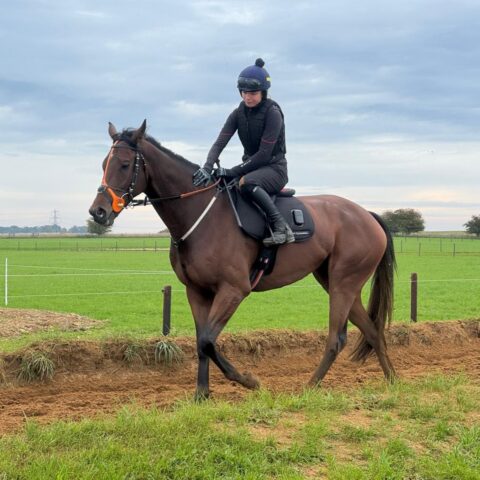
Movement data can be compared with an individual horse’s baseline, allowing abnormalities to be identified
One of the biggest challenges in horseracing is preventing musculoskeletal injuries. Racehorses are elite athletes, placing stress on bones, tendons, ligaments, and joints during high-speed exercise.
Many serious injuries begin as microscopic damage that develops gradually over time. Unfortunately, these injuries are often undetectable before they become severe.
It has been shown that some horses show changes in their stride pattern during the development of an injury, which wearable technology may be able to detect, allowing veterinary intervention before the problem becomes severe. Wearable technology is transforming this area of veterinary identification and care.
Vets can compare current movement data with a horse’s normal baseline, allowing them to identify abnormalities that might otherwise not be obvious during routine examinations.
As with cardiac function, this early intervention can support orthopaedic investigations, modifying training schedules, or beginning treatment before injuries become career-ending.
The possibilities are endless
The future of equine veterinary medicine is increasingly digital. Manufacturers are designing ever more sophisticated wearable devices that are smaller, lighter and more affordable, so that they can be adopted by racing operations of all sizes.
The advent and integration of artificial intelligence (AI) is another exciting development. Machine algorithms can quickly analyse enormous volumes of data and identify trends, recognise unusual patterns and generate alerts when abnormalities are present.
These innovations have the potential to give us a more holistic view of the horse and its wellbeing, helping us predict and diagnose injury far earlier, enabling more precise treatment and supporting improved rehab.
Importantly, rather than replacing traditional veterinary expertise, this technology can help strengthen our role as vets; offering greater insight into the health and performance of elite equine athletes and complementing our clinical judgement.
So while wearable devices can help us do more to protect and promote the horses at the heart of our sport – and as vets we should be embracing these positive changes – there’s no fear that the robots will be replacing us just yet!
