

Earlier this week we informed you about a confirmed case of equine influenza in a horse that had been purchased and brought to Britain from the Goffs Arkle sale in Kildare Paddocks.
Again, our sincere thanks to Mel and Phil Rowley for their prompt action to spot the signs of infection, test the horse and report the findings.
And our thanks to the wider training community for the cooperation, engagement and responsible action shown during a challenging situation.
Tracing horses and determining risk
The BHA has been working through a process of tracing the horses that travelled on the same lorry as the infected horse, and other horses that were purchased at the Goffs Sales that have been transported to Britain.
Through this process we have been able to identify the training yards at potential risk and eliminate those that are at minimal or no risk.
This work has given us increased confidence that there are very few yards at heightened risk of exposure to the virus. This is principally due to the vigilance shown by trainers in ensuring that horses are isolated from their established herd.
Managing risk and testing runners
Where we have identified horses that may present an increased risk, we are dealing with these on a case-by-case basis and according to the individual circumstances and the isolation measures that are in place.
There are a small number of instances where yards that are at a slightly higher level of risk of exposure to the virus hold or have held race entries in the coming week.
These horses have either been withdrawn from the race in which they were entered out of an abundance of caution, or the BHA has required the yard to undertake targeted PCR testing to be satisfied there is no risk of spreading the virus.
We feel this is the right approach, primarily due our vaccination regime and the protection this affords, but also because of the high standard of biosecurity measures that trainers have in place.
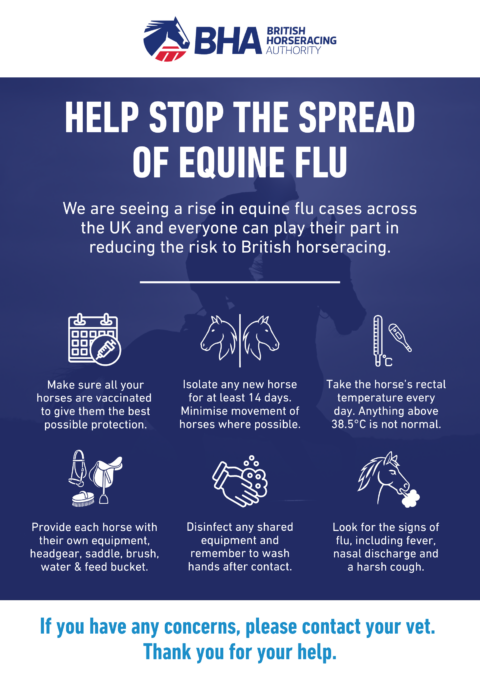
Click to download this infographic of the key steps you can take to reduce risk
This is an approach that has been informed and endorsed by independent infectious disease experts, including Dr Richard Newton, and is supported by the BHA’s veterinary group, which includes stakeholder and independent representatives.
Monitoring and continued vigilance
We will continue to monitor this situation closely and work with stakeholders and industry participants to ensure that we are applying sensible, proportionate and effective biosecurity measures to stop the virus spreading.
We urge everyone in British racing to be particularly vigilant during the period of heightened risk. Please continue to follow best practice infection control advice below, especially around vaccinations and avoiding any mixing of horses from licensed and non-licensed premises.
This is how we protect the thoroughbred racing herd and ensure that racing continues without interruption.
Thank you again for your cooperation and support as we work together to protect British racing and the thoroughbred herd.
Advice for yards on reducing your risk
(i) Vaccination
Vaccination remains one of the best protections our horses have against equine influenza. It reduces the likelihood and severity of illness, and if a horse does become infected, helps limit the spread of infection.
All horses racing in Britain must be vaccinated in line with the Rules of Racing, with booster vaccinations administered no more than six months apart.
(ii) Isolating new arrivals
Despite the benefits of vaccination, it is essential that we prevent any exposure to sick horses or those shedding the virus. This is how we keep our horses healthy and ensure that racing can continue without interruption.
All new horses entering licensed yards, from the sales, pre-training yards or elsewhere, must be isolated for a minimum of 14 days and monitored closely during this period for any signs of infection.
A substantial proportion of the outbreaks we have seen in the non-thoroughbred population in recent months involve horses that have recently moved premises.
(iii) Biosecurity measures
We also advise extra vigilance around general biosecurity on yards. Equine flu is highly contagious, can be airborne over reasonable distances and can be transmitted indirectly via people.
Please remind your staff about your yard’s hygiene measures, including regular hand washing, using designated equipment and disinfecting any shared equipment.
To help, we have developed a simple poster, which can be downloaded and shared with your teams and displayed on your yard.
(iv) Spotting signs of equine flu
Please also be alert to the signs of the virus and monitor all horses daily. These include a raised temperature (above 38.5°C), a harsh cough or nasal discharge, and also things like lethargy and poor performance or loss of appetite.
Rectal temperatures of horses should be recorded every day and any horse showing signs of infection should be assessed immediately by your veterinary surgeon. If a horse is showing these signs or you have any concerns about their wellbeing, please consult your veterinary surgeon right away.