
The BHA has been informed about a confirmed case of equine influenza in a vaccinated thoroughbred racehorse based in a yard adjacent to licensed training premises near Bridgnorth in Shropshire.
The horse arrived at the yard on 12 June from the Goffs Arkle Sale in Kildare Paddocks, which took place between 9 and 11 June.
We have been advised that the infected horse was transported to Britain on the same lorry as eight other thoroughbreds purchased at the sales. These horses have been taken to a mix of licensed yards, pre-training yards and other premises.
The following update has been developed with the advice and input of independent infection control expert, Dr Richard Newton, and sets out important information for racehorse trainers, pre-trainers and other industry personnel, including:
- What we currently know about the situation
- Advice for those who purchased horses from the Goffs Arkle sale
- How all racing yards can reduce your risk of infection.
Confirmed case in Shropshire
We are very grateful to Mel and Phil Rowley for their prompt action to spot the signs of infection, ensure the horse was tested and report the findings to Equine Infectious Disease Surveillance.
The infected horse arrived at the isolation yard on 12 June and at that point was not exhibiting any clinical signs of the virus. These developed late Saturday evening and subsequent testing confirmed the infection.
The horse had been and remains in isolation, in line with the recommended infection control measures for any new horse entering licensed premises. No horses will be permitted to move to or from the yard or the licensed premises until we are confident that there is no wider risk to the industry.
The yard did have a runner at Uttoxeter on Saturday 13 June, but due to the biosecurity measures in place, the risk of any onward contamination is very low. Nevertheless, we ask that trainers who had runners at Uttoxeter on Saturday are particularly alert to the signs of flu in the horses that competed at the meeting.
Horses that travelled together from Ireland
The BHA has worked with the horse transportation companies and identified the thoroughbreds that travelled to Britain alongside the infected horse.
We have contacted the owners and those responsible for these horses to advise on the most appropriate course of action, including testing.
Horses purchased at the Arkle Sale
As a precautionary measure, we are urging all trainers who purchased horses at the Arkle Sale between 9 and 11 June to ensure that:
- Any new horse brought into your yard is fully vaccinated and properly isolated for a period of at least 14 days so that you can be confident they are healthy and disease-free before mixing with your established horses
- All horses in your yard already are fully vaccinated in line with the Rules of Racing. This gives them the best possible protection against the virus.
- You monitor both isolated and established horses daily for signs of infection. These include a raised temperature (above 38.5°C), a harsh cough or nasal discharge. Also, things like lethargy, poor performance or loss of appetite.
- If you are concerned about any of these signs, contact your veterinary surgeon and advise the BHA immediately about any potential or confirmed case.
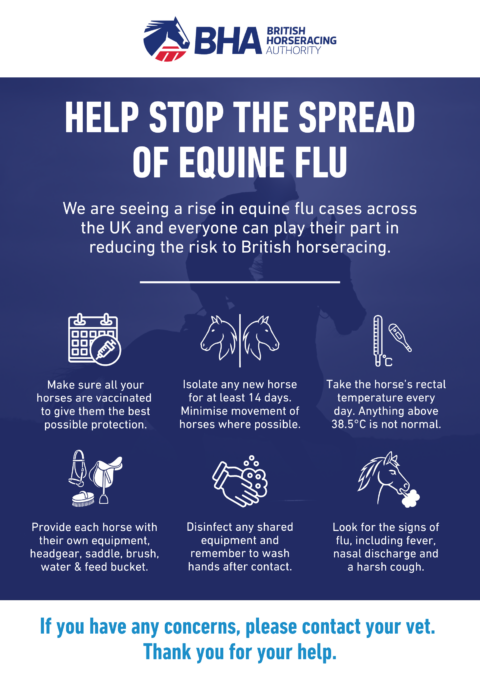
Click to download this infographic of the key steps you can take to reduce risk
Advice for yards on reducing your risk
(i) Vaccination
Vaccination remains one of the best protections our horses have against equine influenza. It reduces the likelihood and severity of illness, and if a horse does become infected, helps limit the spread of infection.
All horses racing in Britain must be vaccinated in line with the Rules of Racing, with booster vaccinations administered no more than six months apart.
(ii) Isolating new arrivals
Despite the benefits of vaccination, it is essential that we prevent any exposure to sick horses or those shedding the virus. This is how we keep our horses healthy and ensure that racing can continue without interruption.
All new horses entering licensed yards, from the sales, pre-training yards or elsewhere, must be isolated for a minimum of 14 days and monitored closely during this period for any signs of infection.
A substantial proportion of the outbreaks we have seen in the non-thoroughbred population in recent months involve horses that have recently moved premises.
(iii) Biosecurity measures
We also advise extra vigilance around general biosecurity on yards. Equine flu is highly contagious, can be airborne over reasonable distances and can be transmitted indirectly via people.
Please remind your staff about your yard’s hygiene measures, including regular hand washing, using designated equipment and disinfecting any shared equipment.
To help, we have developed a simple poster, which can be downloaded and shared with your teams and displayed on your yard.
(iv) Spotting signs of equine flu
Please also be alert to the signs of the virus and monitor all horses daily. These include a raised temperature (above 38.5°C), a harsh cough or nasal discharge, and also things like lethargy and poor performance or loss of appetite.
Rectal temperatures of horses should be recorded every day and any horse showing signs of infection should be assessed immediately by your veterinary surgeon. If a horse is showing these signs or you have any concerns about their wellbeing, please consult your veterinary surgeon right away.
More information and next steps
We have developed several resources for yards to help reduce your risk and protect the thoroughbred racing herd from equine influenza.
You can read the latest advice here on the BHA website. We also produced a blog, which summarises the key guidance, alongside this poster and Q&A video for racing staff.
The Equine Infectious Disease Surveillance website provides links to resources for veterinary professionals, including the EIDS disease reporting platform, the Horserace Betting Levy Board (HBLB) flu surveillance scheme and Equiflunet.
We continue to monitor this situation closely, working with EIDS and independent infectious disease experts, and will keep the British horseracing industry updated.
For any immediate questions, please contact: [email protected].