
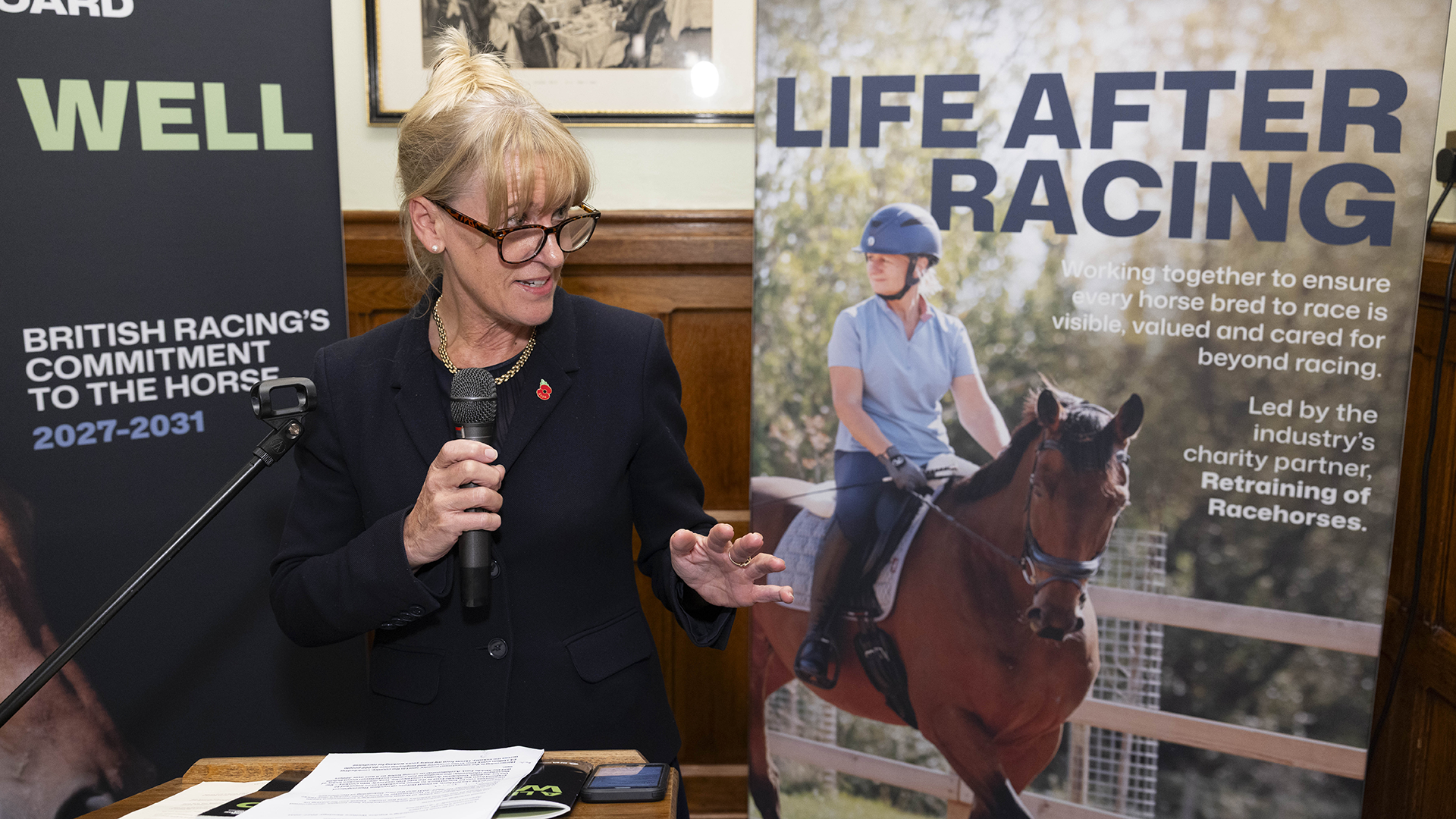
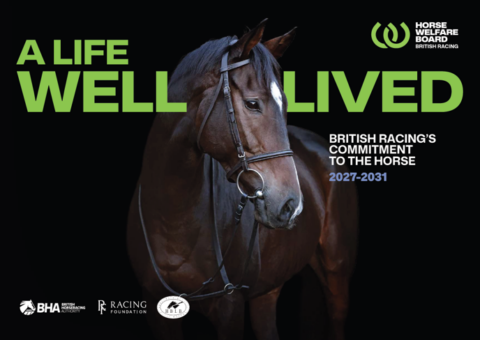
Last night in Westminster the Horse Welfare Board and BHA launched British racing’s next five-year welfare strategy: “A Life Well Lived: British racing’s commitment to the horse”.
At the event in the Houses of Parliament Baroness Minette Batters, independent Chair of the Horse Welfare Board, gave the following speech:
Good evening everyone,
I’d like to officially welcome all parliamentarians here tonight, distinguished members of the racing industry and the media. Thank you for joining us.
It is a great privilege, as Chair of British horseracing’s independent Horse Welfare Board, to be here in Westminster to launch both racing’s new Horse Welfare Strategy for 2027–2031 and the new Retraining of Racehorses Strategy.
Horseracing started here, in Great Britain, all modern Thoroughbred racehorses can be traced back to three foundation sires imported to England from the Middle East in the late 17th and early 18th Century – the Darley Arabian, Godolphin Arabian and Byerley Turk are reminders today of the unique relationship the racehorse has cemented between Great Britain and the Middle East. A relationship as strong today as it was over 300yrs ago.
Horseracing is the second most popular sport in the country, contributing £4.1 billion every year to our economy and employing over 85,000 people across the industry. I know from my many years working for racehorse trainers: David Elsworth and James Toller that horseracing is also about the unique relationship between the mighty thoroughbred and people – no one cares more about our racehorses than those that are looking after them. Not just stable staff but trainers, jockeys’ vets’ nutritionists, physios and farriers.
Recently I was fortunate to join the brilliant initiative: ‘Racing to School’. Every racecourse in the country opens its doors to our schoolchildren. Sport changes lives, it gives hope, it opens doors and it allows everyone from all walks of life to pursue a dream.
Horses have been a part of my life for as long as I can remember. I have ridden in races, both on the flat and over jumps. I’ve bred and trained and rehomed retired racehorses. I have seen at first hand the extraordinary relationship that exists between people and horses.
That relationship brings enormous enjoyment. But it also brings responsibility. And for British racing, that responsibility is very clear:
The horse must be at the heart of everything we do.
Over the past five years, racing has made important progress. We have improved our understanding of safety and risk, invested in science, research and data, strengthened traceability and aftercare, and worked to communicate more openly about welfare.
But welfare is not an area where any sport can ever say: job done. This country was the first in the world to legislate animal welfare standards. The last parliament introduced the Animal Sentience Committee. Our launch today of A Life Well Lived sets out an ambition to lead the world on horse welfare.
Our responsibility is not simply to establish good welfare standards and maintain them, but to be able to continue to optimise and measure tangible benefits for our racehorses. At this point I want to put on record my sincere thanks to our funders – The Racing Foundation and the Horseracing Betting Levy Board.
Together their considerable financial support has allowed us to set out 20 priorities for the next five years, based around four outcomes: Quality of Life, Safety, Lifetime Responsibility and Trust. Underpinning all four is a determination to follow the evidence, use data effectively, be transparent and hold ourselves accountable for progress.
One of those four outcomes – Lifetime Responsibility – is about making sure our responsibility to the horse extends beyond its racing career and throughout its life. And a central part of delivering that is traceability.
If we are serious about being accountable for horses throughout their lives, then quite simply, we need to know where our horses are.
Our ambition is to achieve full lifetime traceability for all horses bred for racing in Great Britain – creating a connected picture of a horse’s journey from birth, through racing and into retirement and second careers.
But our ambition doesn’t stop there, because there is an opportunity for all horses and ponies beyond racing. By working with Defra, the British Horse Council, other equestrian disciplines and international partners, I believe racing can help develop a traceability blueprint which will aim to transform the horse welfare requirements of every horse and pony in this country – starting by simply knowing where they are.
Why? Because this year we have witnessed an extremely serious outbreak of equine flu right across the country. Imagine a world where every horse and pony has a digital passport – that we knew where they are and with the help of government, we can make that a reality. But we can and must go further: vaccination records, antibiotic usage and other vet meds – what has been a paper file becoming digital one – real-time information when it’s needed. We want to strengthen traceability at all stages of a horse’s life, particularly at retirement and that crucial first step out of racing, working in partnership with Retraining of Racehorses, the sport’s appointed aftercare partner. We also aim to improve data sharing with other equestrian disciplines; improve national and international information sharing; and improve core systems.
That is why traceability is fundamental to our Lifetime Responsibility commitment. It is about far more than collecting data. It helps us understand what happens to our horses, target welfare interventions, strengthen disease prevention and biosecurity, and demonstrate that racing’s responsibility does not end when a horse finishes its racing career.
But traceability is only one part of this strategy.
Another important development is how we approach safety. We now have a much stronger understanding of what increases risk on the racecourse, and we continue to evolve how our races are run, programmed and racecourses prepared to reduce this as best we can However, the next step is also to broaden our understanding beyond the course – to build a picture of how factors in the day-to-day training and lives of our racehorses might also contribute to this work.
That means improving our understanding of injuries at home and improving our data from the training environment. By looking at factors such as training regimes and home surfaces, we can potentially identify risks earlier rather than simply learning from them after an injury or fatality has occurred.
New technology can help us do that. The strategy will continue to explore how AI, wearable technology and developments in equine data collection and analysis can help build our evidence and help us ultimately help us to predict and prevent risk, before it can occur.
And our safety work will look further upstream too – at breeding, early years and pre-training, to ensure we breed and prepare horses resilient and ready to take on the race.
So this is a broader, more preventative approach to safety: continuing to make racing safer on the racecourse, while looking to better identify and predict risk from across the horse’s wider life.
That same whole-life thinking runs through the strategy. Quality of Life means looking at the horse in the round – physical health, mental wellbeing, husbandry, training and environment. And alongside traceability, Lifetime Responsibility also means supporting horses through the transition from racing and beyond, including our continued work with Retraining of Racehorses.
And Trust means being open about the difficult issues too – including injuries and fatalities, the whip and what happens to horses after racing. Public confidence cannot be secured simply by telling people that we care about our horses. It has to be earned through our actions.
That is why this strategy is not intended to sit on a shelf for five years. Its 20 priorities will translate into annual plans with clear metrics to define success. We will review progress, respond to new evidence and adapt when we need to.
And none of this can or will be delivered by the Horse Welfare Board alone. Welfare is a shared responsibility – across breeders and owners, trainers and stable staff, jockeys and vets, racecourses, regulators, aftercare organisations, and everyone whose decisions affect the life of a Thoroughbred.
There will be difficult questions and areas where people disagree. What matters is that we ask those questions, follow the evidence and act when the evidence tells us change is needed.
We have strong foundations on which to build. But we should never be complacent.
Our ambition is straightforward: to give every Thoroughbred bred for racing the best possible quality of life; to make our sport safer; to take responsibility for our horses throughout their lives; and to earn and maintain the trust of the public.
The horse gives an enormous amount to our sport. Our responsibility, in return, is to ensure that their welfare remains at the heart of its future.
Thank you.
