
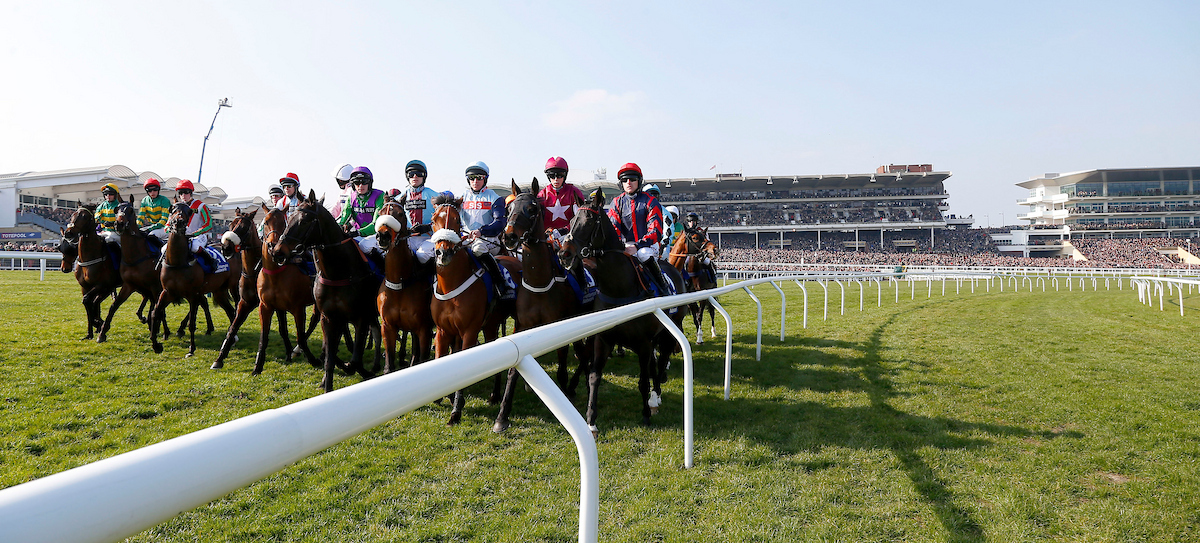
- New procedures include changing definition of pace at which the field can approach the tapes, and the introduction of a visible “start area” with races only started once the field enters this area
- Objectives include more controlled starts and fewer false starts
- Changes were developed in consultation with jockeys, trainers and officials, and to be implemented initially on a trial basis
- Further recommendations published in July as a result of extensive consultation process remain in development
New starting procedures for Jump races will be introduced from 5 October, with the objective of ensuring more controlled starts and fewer false starts, especially at major fixtures.
There are two changes to the starting procedures being implemented from this date:
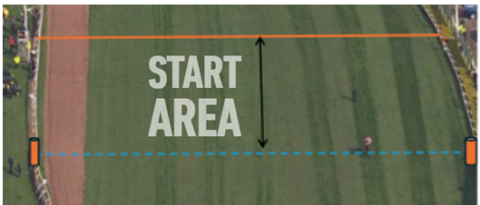
- The introduction of a visible “start area” designated by a new set of marker poles up to 40 yards back from the existing marker poles.
Races will only be allowed to start when the front rank of the field has entered the designated start area.
The objective of this is that riders will have certainty that the race will not be started in advance of this area and have certainty that their horse must be moving at walking pace within this area.
- The wording within the rules as to the maximum pace at which a horse can approach the tapes has changed from “walk or jig-jog” to “walking pace”.
The front rank of the field must approach the tape at no faster than a walking pace, not at a ‘jig-jog’ as has previously been the case.
This has the objective of ensuring fewer false starts as it provides greater consistency in the starting process. Also, for instance, if the field is approaching no faster than a walking pace but a horse is cantering on the spot, the starter has discretion to let the race begin.
As per the current rules any horse who has fallen behind the field may be permitted to trot to catch up if required, until they have caught up with the field.
More details about the new procedures and how they will work can be found here.
An explanatory video can be found here or by clicking on the link below.
The new procedures will be introduced on an initial trial basis for a period of six to eight weeks. During this period, if a rider were to breach any of the new rules then they will be informed of this by stewards but not given a penalty. However should any of the existing start rules be breached then penalties will still apply.
During the trial period the BHA will continue to engage with riders and should any further adjustments be required then they will be considered prior to formal implementation of the rules and procedures. There is also the possibility to extent the trial period if necessary.
The new procedures are the result of extensive engagement with the PJA, jockeys, trainers and BHA officials. In July, a series of recommendations were published following a consultation process.
Subsequently those recommendations were discussed further with participants and a new starting procedure for jump races agreed. Jockeys who participated in the process included the likes of Keith Donoghue, Liam Harrison, Jack Kennedy, Danny Mullins, Sean Quinlan, Gavin Sheehan, Harry Skelton, Mark Walsh and Tabitha Worsley among others, and we are grateful for the part played by everyone involved in this process.
Cathy O’Meara, Head of Raceday Officials for the BHA, said:
“I would like to express our thanks to all of those who have given their time throughout this project, in particular to the jockeys who have willingly shared their time and expertise and helped us shape these new procedures.
“We are hopeful that the new procedures will create greater certainty for jockeys and the viewing public and reduce the number of false starts, especially at major fixtures where the issue is much more acute.
“We’ll monitor how it works through the trial period and will work with jockeys, trainers and officials to determine whether any adjustments are necessary.”
Dale Gibson, Executive Director (Racing) for the PJA, added:
“A smooth and fair start for all horses is important for everyone – jockeys, trainers, owners, racing staff and those betting on the sport – and the PJA and our members were keen and active participants in the review. We therefore welcome the outcome and recommendations, many of which were proposed by senior riders and our safety officers. With relatively few valuable, large-field races throughout the year, the changes cannot guarantee there will never be false or aborted starts. But we believe the changes will lead to an improved process and make them less likely in general and less frequent overall.
“We will continue to work closely with our members and the BHA on the remaining areas for consultation during the initial trial period once the amended procedures commence.”
The three other recommendations which were published in July remain in development, including:
- Changes to the track layout at Cheltenham racecourse’s two most problematic starting points (2 mile and 2 1/2 mile): This work is nearing completion. These two starts are not used in the same way during the October William Hill Showcase meeting but revised layouts will be in place for the November meeting.
- Implement a tiered penalty increase specifically targeting Class 1 and Class 2 races across all courses: A consultation regarding the penalty changes remains ongoing with a view to implementation in Q1 2027.
- Explore the introduction of a live audio recording system at the start area to capture communications and instructions given by starters to jockeys, with a direct feed to the stewards’ room: Scoping of technology and consideration of processes ongoing, with a view to implementation ahead of 2027 Cheltenham Festival.
Notes to Editors
- More detail about the new procedures can be found here.
- The percentage of races resulting in an aborted start at the Cheltenham Festival had increased annually over the last five years from around 18% in 2022 to nearly 40% in 2026. This is in contrast to wider jump racing where the rate has fluctuated between around 3% – 4% of starts over the same period.
- Groups who participated in the consultation include:
- BHA officials and Racing Department
- Cheltenham racecourse
- Horserace Bettors Forum (HBF)
- Irish Horseracing Regulatory Board (IHRB)
- Irish Jockeys Association (IJA) and Irish jockeys
- ITV and RTV broadcasters
- National Trainers Federations (NTF) and trainers
- Professional Jockeys Association (PJA) and jockeys