
Blog: Non-runners at the start
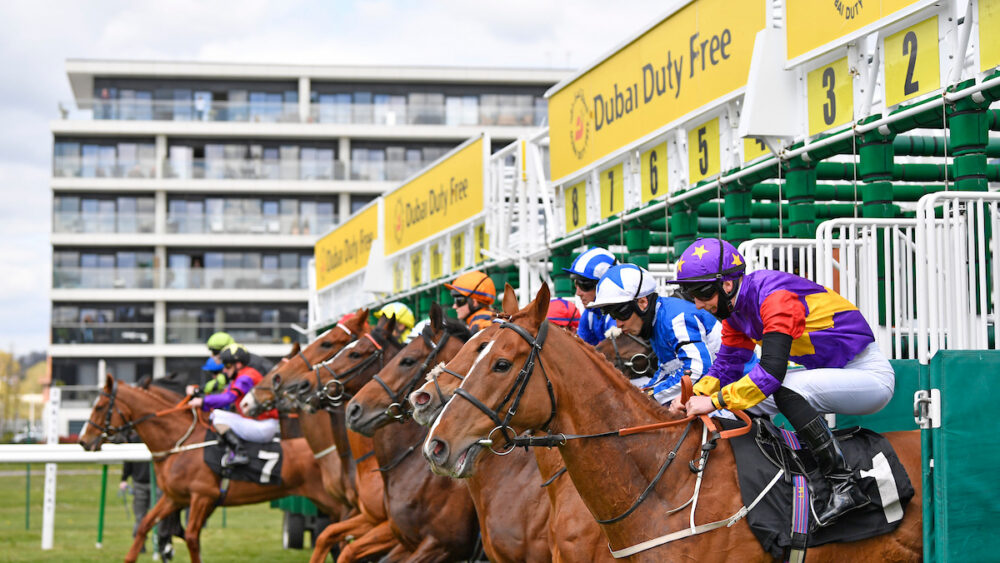
Needless to say, the incident involving the declaration of Benvenuto Cellini as a non-runner in this year’s Derby has caused significant debate. The strength of feeling is understandable given the magnitude of the race.
The purpose of this blog is to set out the background and rationale regarding the introduction of this rule, and to address some of the comments and concerns that have been raised.
From 1 May 2024 we introduced an amendment of Rule (H)6 in order to allow the BHA Stewards to declare a non-runner in any race beginning from starting stalls if they believe that a horse has been denied a fair start.
The change aligned Britain with the International Federation of Horseracing Authorities (IFHA) model rule and the approach applied by most other major racing nations. Its introduction followed engagement with and feedback from industry stakeholders, including participants and the betting industry.
The rationale behind the rule is that it is unfair to the betting public to lose their money on a horse who is prevented from starting on equal terms.
At the moment when the start was enacted in the 2026 Derby, Benvenuto Cellini had one leg trapped in an elevated position on the running boards in the stalls shortly before the start was effected.
As is normal process, the BHA’s raceday stewards held an enquiry into the incident immediately after the race, with the starter, veterinary officer and rider interviewed.
Once the evidence had been gathered, the stewards considered the questions as to whether Benvenuto Cellini was denied a fair start and, if so, did it materially affect the colt’s chances in the race.
The unanimous decision reached by a highly-experienced stewarding panel was that the horse was prevented from starting on equal terms and that, as a consequence, his chance in the race was materially affected.
If the starter had been aware that the horse was on three legs, with his leg physically entangled in the stalls, and his chances were going to be impacted in the race, he would not have enacted the start. The horse’s leg would have been released, taken out of the stalls and checked by a veterinary officer and then reloaded him if safe to do so.
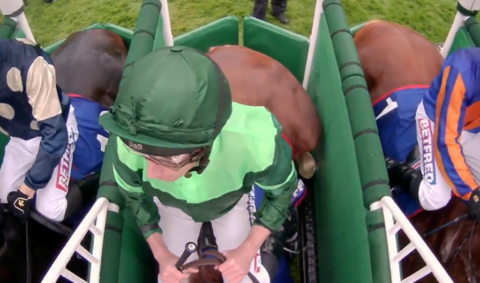
Credit: ITV Racing
But the incident happened in mere fractions of seconds. The starter wasn’t aware, and couldn’t be expected to have been aware. Therefore, it would not be fair to all of those who backed the horse that he should count as a runner.
One of the most common concerns we are hearing from punters and media is that this now sets a dangerous precedent. We are being asked the question “what happens if a horse rears when the stalls open? Will they now be declared a non-runner?” The answer to this question is very clear – no they will not, this is entirely different.
When this rule was announced a number of examples were cited as to when it might be enacted. One of those examples was as follows:
“Where a horse’s own behaviour alone, after the starting mechanism has been operated, results in the horse being unable to start on equal terms, the horse shall not be declared a non-runner. However, if a horse, for example, kicks out and gets caught in the starting gates before the starting mechanism has been operated, and the starter is unaware leading to the horse being unable to start on equal terms as a result, the Stewards can consider declaring a non-runner.”
This example can clearly be applied to the incident in the Derby, and this is plainly different from a horse rearing up after the starting mechanism has been operated. In such incidents the horse would be declared a runner as they have been given the opportunity to break evenly, but didn’t. In the case of Benvenuto Cellini he was denied the opportunity to break evenly, and is therefore declared a non-runner.
Further to this, the question is being raised as to whether a horse would be removed from the race if they rear up in the stalls prior to opening. This is also highly unlikely to be the case. The difference with Benvenuto Cellini is that his leg was caught in the stalls, as opposed to just rearing up. This is the differentiating factor. In such circumstances prior to starting the race the horse would be removed from the stalls and checked by a vet prior to reloading and running (if able). This does not apply when a horse just rears up. A horse simply rearing up without becoming in any way entangled with the stalls would fall under the category of a horse’s own misbehaviour and therefore count as a runner.
A further comment we are seeing suggested is that this scenario goes beyond what was envisaged when this rule was introduced. However, the fact that such a scenario was specifically cited when the rules were announced shows that it does not, and the rules were intended to capture situations such as this.
The rules themselves are intentionally broad, stating that “The Stewards may declare a horse a non-runner where…a horse is denied a fair start, and its chances are materially affected, including but not limited to….x, y, z”. Clearly it is not possible to list every possible example in the rules of racing, and it is ultimately down to the stewards’ discretion on the day. This discretion is important, as circumstances may vary and stewards must have the ability to act accordingly.
A further question being asked is whether the horse would have been disqualified if he had won or been placed in the race. Head of Stewarding Shaun Parker answers this question in this interview.
🗣️ Following @EpsomRacecourse Derby favourite Benvenuto Cellini being declared a non-runner, our Head of Stewarding Shaun Parker explains:
– How the decision was reached
– What would have happened had the horse won or placed
– How this non-runner rule is applied consistently… pic.twitter.com/a9ZYCkDTIw— British Horseracing Authority (@BHAHorseracing) June 6, 2026
In short: If the horse had won the race then his chances clearly would not have been materially affected by the issue at the start, therefore would not be disqualified. If the horse is placed the situation is more complicated, and the Stewards would consider all the relevant factors before making a decision.
It is being suggested in some places that the rule is not being applied consistently, that it has only been applied because this was a significant ITV race and that the World Pool somehow impacted the decision. This does not stand up to scrutiny. This rule has, in fact, been applied six times in 2026. The other incidents were at Yarmouth, Windsor, Kempton, Southwell and Exeter (the rule was extended to include Jump races in 2025). All these examples were away from ITV cameras and the World Pool races, yet the rule was applied consistently.
The presence of the ITV Racing cameras has caused some debate, with the suggestion that its placement above the stall of the Derby favourite may have impacted the outcome of the enquiry – and could indeed create the situation where rules may be applied differently on different racedays.
To be clear, the stewards at Epsom made their decision based on the available stewarding cameras and having heard the evidence of those involved in the incident. The ITV stalls camera was not available to the stewards until well after the enquiry was underway – and while we feel it vindicated the decision, it was incidental to the outcome.
It is also worth pointing out that while disparities in technology often exist in professional sport – e.g. certain racedays have drone footage available to the stewards while others don’t, and Video Assistant Refereeing is only available in certain tiers and competitions of professional football – the stewards made their decision at Epsom in the same manner as they did at all the other courses where the rule was enacted in 2026. Indeed, in reaching their decision at Windsor, the stewards relied on the evidence from those involved, as video footage of the incident was not available.
The incident we witnessed on Saturday is probably the most extreme test of this rule imaginable, involving the heavily backed favourite in the Derby. We entirely understand the frustrations of those who were affected by the Rule 4 deduction, and the impact on bookmakers.
However, this must be balanced against the impact on those who had backed the horse and were denied a fair start, which is who this rule was brought in to protect.
In 2018 a remarkably similar incident occurred involving favourite Harry Angel in the Diamond Jubilee Stakes at Royal Ascot. While it is fair to say the Harry Angel incident was more pronounced in nature, the principle was very similar, as was referenced by the ITV broadcast team on Saturday.
This incident occurred prior to this rule being in place, and Harry Angel therefore had to count as a runner. This led to significant, sustained criticism and complaint from media and punters alike regarding the unfairness that a horse should be deemed a runner when he had not been afforded an equal start and his chance in the race had been materially affected.
The fact is that there is no one set of rules which will be satisfactory for everyone in such a situation. We understand why those who are impacted by the incident on Saturday are disappointed. Equally, if this rule wasn’t in place, then those who backed Benvenuto Cellini would have a right to feel aggrieved.
It is the view of the BHA, however, that we should be in line with the majority of the international racing community on this issue, rather than an outlier
The Stewards themselves followed the procedure for enacting this rule to the letter. The enquiry was announced quickly after the conclusion of the race. The enquiry was then held in quick order and a result reached and announced in good time, and again well communicated.
Shaun Parker then immediately made himself available to carry out interviews with ITV and Racing TV, as well as posting an explanatory clip on our own digital channels – showing a level of immediate accountability rarely seen in other sports. We thank Shaun and his team for their calm professionalism in the highest pressure of situations. The personal abuse that they have received, which prompted the BHA to post on social media calling for greater respect, is deeply regrettable.
It is completely understandable that decisions taken by BHA officials may prompt passionate debate and be subject to robust scrutiny.
This is the nature of elite sport and something we do not shy away from.
However, we will never accept vile and unacceptable abuse directed…
— British Horseracing Authority (@BHAHorseracing) June 7, 2026
Some industry and betting stakeholders have suggested that the rule should now be reviewed. We will of course listen to any concerns which are raised and engage with those within the sport. Our rules are constantly under review and the same will apply here.
We also understand that many people will disagree with the contents of this blog, which is intended purely to set out the rationale behind the rules and their application on Saturday.
However, we stand by our Stewards who made this decision on the day in line with both the Rules as they are framed, and the intention for which they were introduced.