
Blog and video: Calling the correct result in a close finish
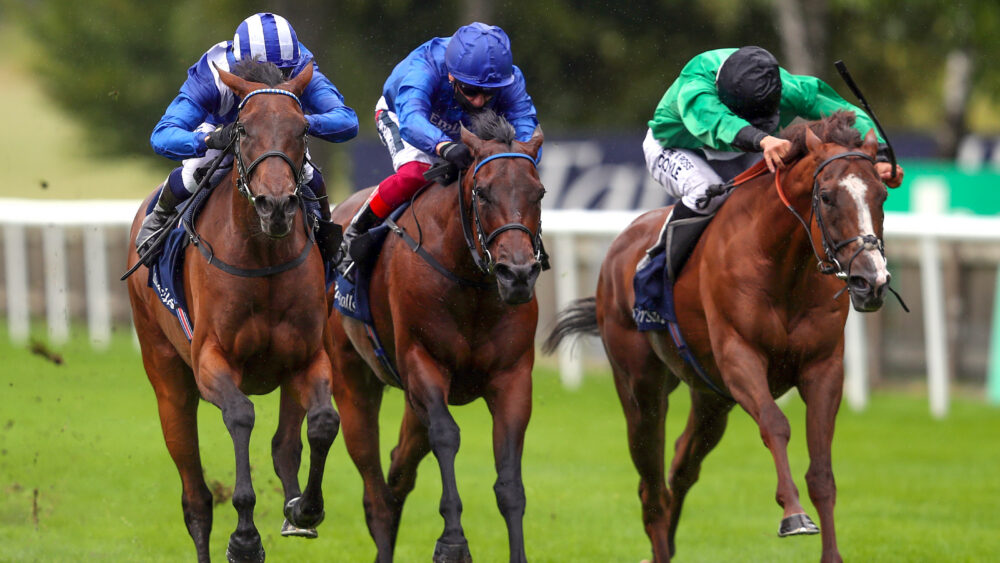
In recent weeks, there have been a number of extremely close finishes to races requiring the judge to determine the outcome via the use of photo finish technology. The following blog sets out how our judging teams carry out this process as they work to ensure the correct result is called.
By David Hicks – Team Principal, Clerk of the Scales & Judges
The photograph
In March of this year, ultra high-resolution cameras were rolled out across every British racecourse to improve the quality of images judges are able to review when determining the outcome of a race.
These cameras capture images at around 6,000 frames per second, a much higher frame rate than previously, and also provide a significantly clearer image for judges to review.
It is important to keep in mind that the photo finish camera is the only camera that is aligned directly on the winning line. TV cameras, including the slow-motion camera often used on the broadcasts you are watching at home, may be very close to the line but they are never directly on it.
Once in position, the cameras record many thousands of photos of the winning line which shows us a timeline of when each horse crosses the line. Every vertical line of pixels in any of the images you see is a photograph of the winning line.
A photo finish
My approach is to say that every race is a dead heat until you have evidence that it is not. Clearly, in a majority of cases it is not difficult to do that but, as we have seen recently, finishes can get extremely tight.
When all horses have completed a race, the photo finish operator stops recording and immediately shows the Judge. In most cases, where the winning margin looks by eye to be less than a head, we will announce a photo finish on course and begin the process of determining the result.
At this point, the operator is able to enlarge the image on the relevant horse so that a line can be placed on the leading part of its head. Sometimes, as we saw at Newmarket in the second race of the afternoon on Saturday 4 July, it is not always immediately clear which horse, if any, has come home in front.
When this is the case, we can continue to zoom in further, ensuring that there is sufficient contrast between the image of the horse’s nose and the background, so we can clearly identify the leading part of the horse’s head. In the case of the race at Newmarket, we were able to identify a gap, albeit only a few pixels.
To help demostrate this further, we are also able to move the line across the image to the point where it touches the second horse’s nose. Remembering that every vertical line is a photograph of the winning line, what we could see at this point in time was that the winner’s nose was already across the line and was therefore in front.
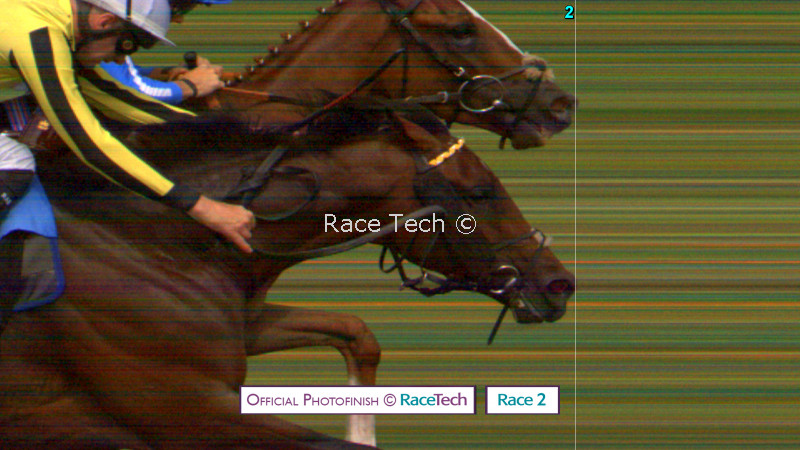
Having seen this evidence, the Judge will confirm the result with the Stewards before announcing it to the public, in order to provide an extra layer of checks and verification on top of the judge’s decision.
The governing principles
The introduction of the new cameras earlier this year has not changed the way in which we are going about our work as judges. We still follow the same processes and call results in exactly the way we did previously.
What I can say is that, as a result of the increased frame rate and image clarity of the new equipment, we are now able to separate horses in a way that we would not have been able to previously.
Of course, this doesn’t necessarily mean an end to dead heats entirely, but we are now able to call results with a much greater degree of accuracy.
As far as the time taken to call some results, there is no time pressure directly on our judges to determine a result. Naturally, we want to get a result confirmed as soon as is reasonably possible but the main thing for us is that we take our time and clearly examine the evidence in front of us. Our priority is announcing the correct result in the first instance, rather than rushing to get a result out that may not be correct.
In conclusion
The introduction of the new cameras has represented a shift for all of us involved in the sport, given the increased ability we now have to determine results. It is entirely understandable that those of you following the sport and betting on races may have been surprised by some of the recent decisions.
I can assure you with total confidence that all recent examples of tight finishes have been called correctly.
Recognising that due to the challenges with viewing some images in a lower resolution than the judges have access to, the wide image alone may not initially provide full confidence in the result called, these extra images will show a close-up of the gap that has been identified by the Judge, as well as another showing the second-placed horse hitting the line with the winner already beyond it.
I would also remind everybody that the clearest view of the image is that seen by the judge on course. Photographs of a webpage or television screen shared on social media result in a compressed image that can present a misleading view on a given outcome. If you have any concerns, I would always advise you to check the images uploaded to the BHA website.